Photos and text: Katja Enberg
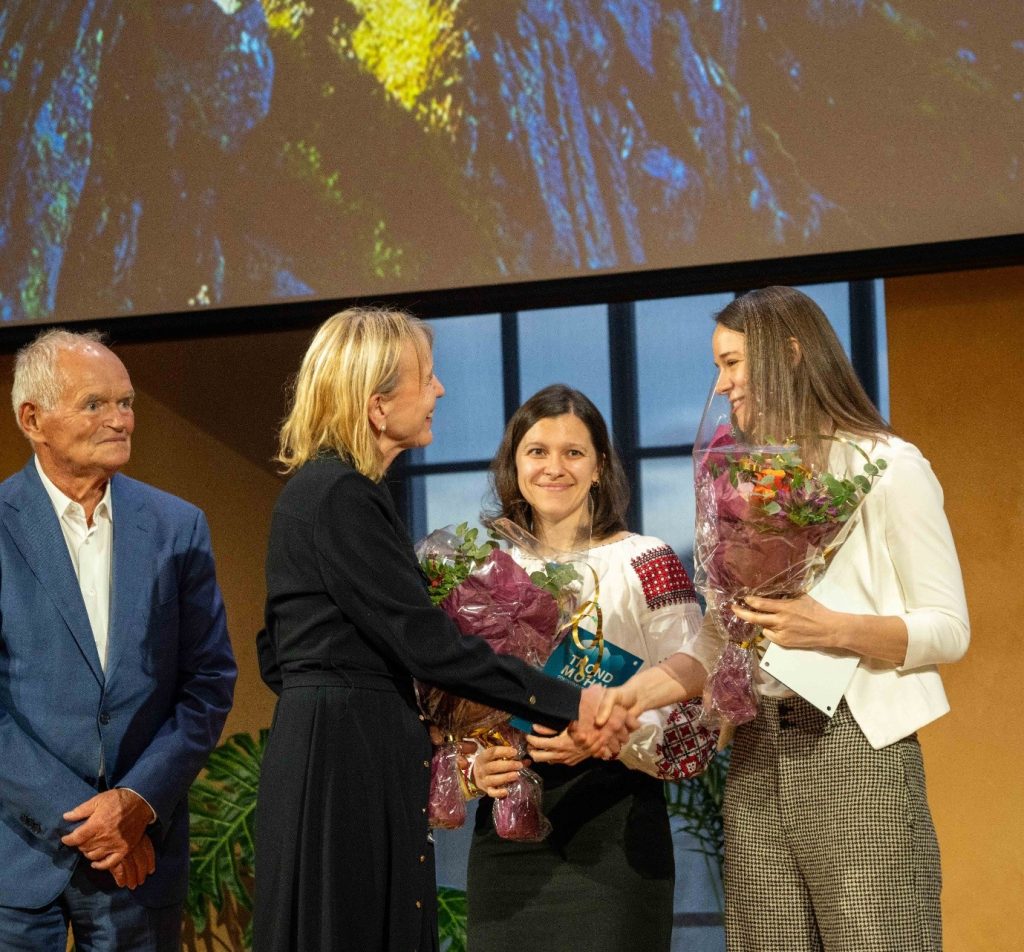
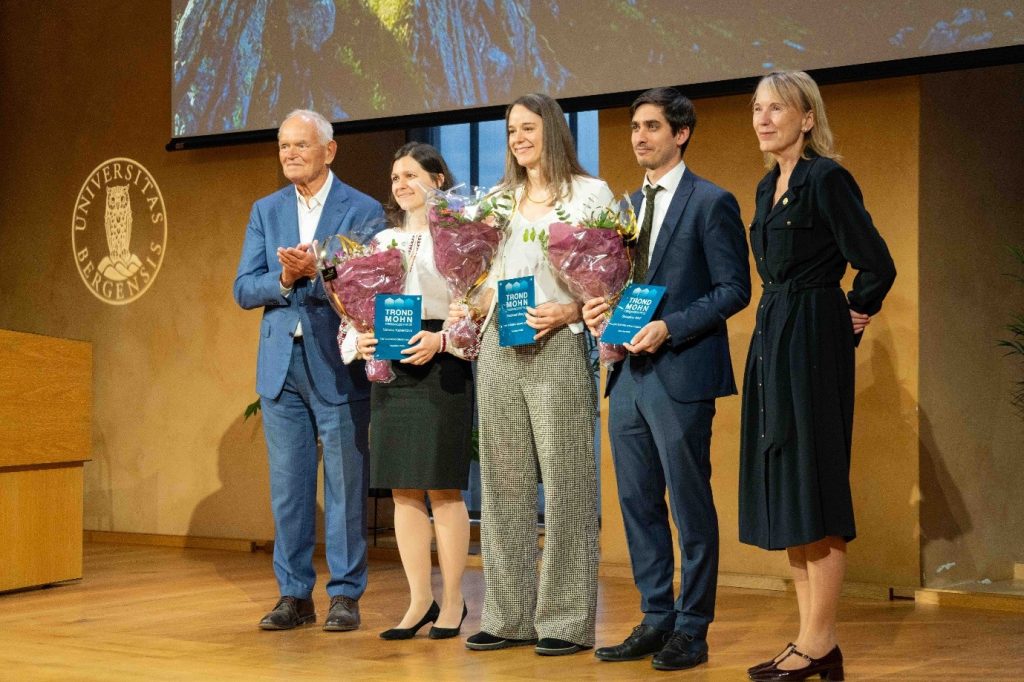
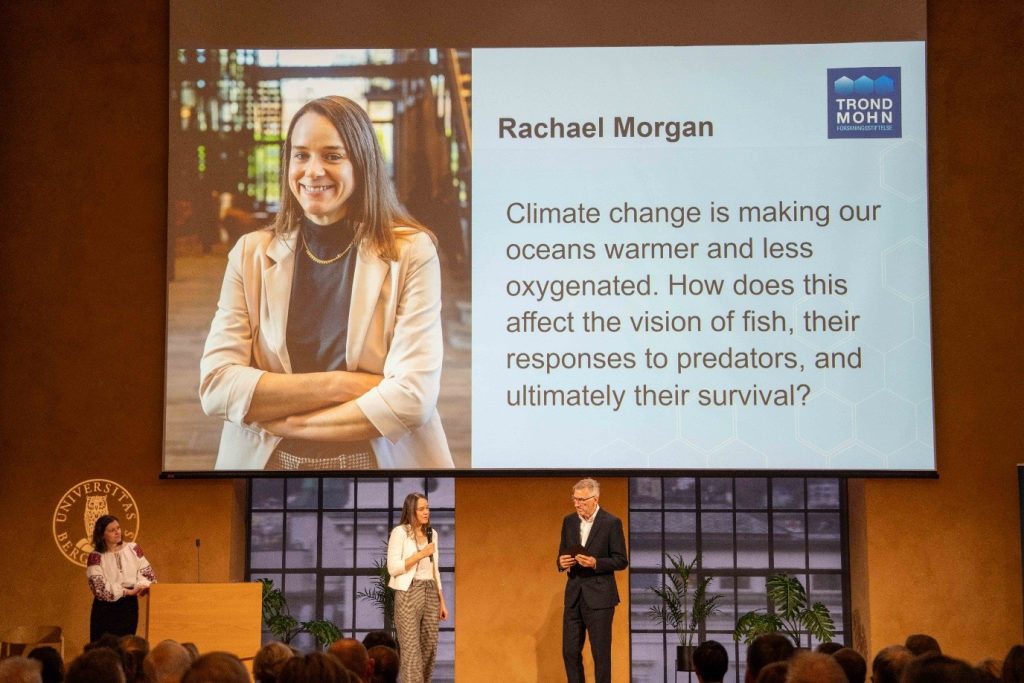
On Friday many of us at BIO attended the Trond Mohn Foundation’s yearly celebration at the University Aula. And it was particularly festive experience as one of our own, Rachael Morgan, was awarded the starting grant. We had a chat with Rachael to hear about her thoughts and of course about her project!
Rachael, how does it feel like to receive this grant?
I am delighted and extremely honoured to have been awarded a Trond Mohn Foundation (TMF) Starting Grant to establish my own fish ecophysiology research group here at BIO.

What are you going to research?
My project addresses a critical question: How does climate change affect the sensory systems and fear responses of fish? Focusing on Atlantic cod, we will investigate how elevated temperatures and hypoxia compromise visual perception and threat detection, with cascading effects on behaviour, energy allocation, and ultimately survival. To tackle these questions, we will combine a suite of complementary techniques, including retinal oxygen measurements, behavioural optomotor experiments, electrophysiology, respirometry, behavioural assays, and gene expression analyses. Together, these approaches will allow us to link environmental stressors to changes in sensory performance, neural processing, metabolism, and behavioural decision-making.
In the interview at the seremony the master of ceremony Arne Møller described your experimental setup as «horror cabinet». What was he talking about?‘
A central component of the project involves using immersive virtual-reality technology to create ecologically realistic scenarios in which cod experience simulated predator attacks that trigger authentic fear responses, as if the threats were real. This innovative setup enables us to systematically explore how warming and hypoxia interact with predator–prey dynamics under controlled conditions, something that has been extremely difficult to achieve until now. By integrating virtual reality with physiological, behavioural, and molecular measurements, we can uncover how changes in vision, impact fear and shape behaviour, feeding and energy allocation, and therefore overall performance in fish. Considering the crucial role of predation that fish face in the wild, our findings will provide new insight into how climate change will affect natural fish populations.
When does your project start and where?
The four-year project will launch next summer and represents an exciting opportunity to expand our department’s research in marine ecology and climate change biology. I will be affiliated with the Marine Developmental Biology research group and look forward to strengthening connections within that and the Environmental Biology and Aquaculture faggruppe as well as maintaining my ongoing collaborations with the Theoretical Ecology Group (TEG), where I am currently based, and welcome other collaborations across the department.
Any final words?
I am deeply grateful to the Trond Mohn Foundation for their support and to BIO for providing such an excellent environment in which to develop this research program. This is truly a dream project, and I am very much looking forward to the years ahead!